Nederlandse Stichting Helpen met Paarden – Equitherapie
 

Trainingsprogram Equitherapy

TRAINING • SHP-E(NL)

The Equitherapist – A Dream Profession?

Insights into the profession, training program, and curriculum of SHP-E(NL)
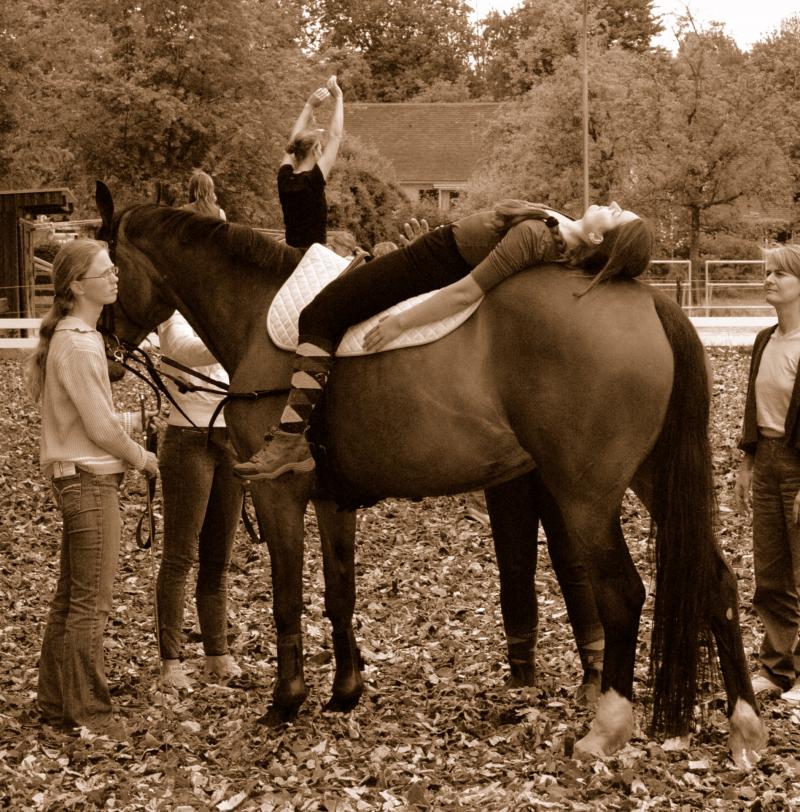
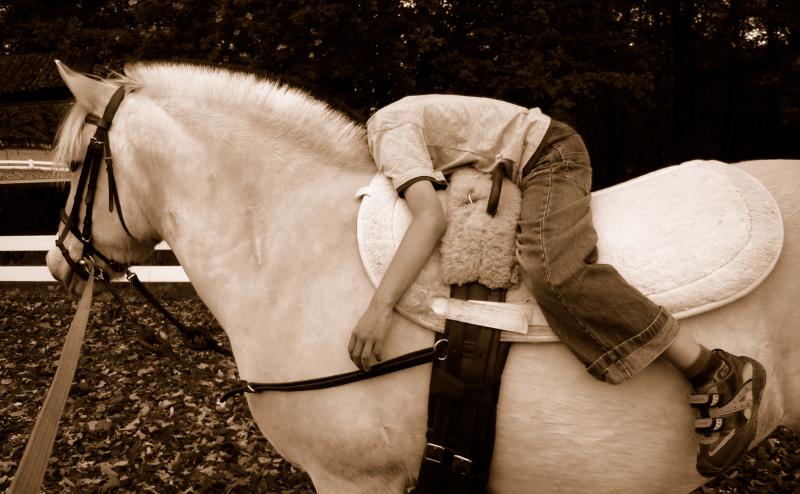
Equitherapist working with horse

Working with clients and with a horse as co-therapist is truly fascinating. Personally, I cannot imagine a more satisfying career and enjoy both the therapies I provide and the horses I work with in training and between their professional activities. My colleagues and lecturers on the equitherapy training programme feel the same. Like me, they too have the inner fire that is needed to exercise this profession and are able to draw huge amounts of energy from the therapies and from working with our wonderful horses.

However, I should also say that it is certainly not a dream profession in the literal sense. Firstly, if equitherapy is practised well and on a self-employed basis, it is not a way to get rich, as, given the time and energy that must be invested, the income can only be considered modest. Although the costs and the work relating to the horses can be justified in terms of the notion of an ideal job, they are not so easy to justify from an economic point of view. If all costs were fully reckoned up and passed on, clients from more disadvantaged social backgrounds would probably not be able to benefit from these therapies.

It is therefore a very good idea for equitherapists, in particular those coming new to the profession, to have a second source of income or primary profession, or to consider practising equitherapy as an employee.

 
Training session

To many riders and horse-lovers who work in helping professions, equitherapy seems the ideal opportunity to combine their primary qualification with their hobby. Experience over the last 10 years has shown that the profession attracts serious, capable candidates, but also some who are unprofessional or mentally unstable. Therefore, candidates are closely observed during selection and training.

The SHP-E(NL) training programme is aimed at those interested in, and capable of, seeing the role of the horse as part of a cyclical process under responsible guidance, requiring a sound understanding of equine biomechanics, sports physiology, and horse psychology.


Aim of the Training Concept & Access Criteria

Aim: To produce equitherapists who are capable of using their skills appropriately under their own responsibility, who are aware of obligations towards clients and horses, and who ensure continuous development through supervision and peer intervision.

Access Criteria: SHP-E(NL) training is open to applicants with a psychotherapeutic, educational, or paramedic background who have a riding qualification (or sufficient experience up to L-level) and intend to acquire a vaulting instructor qualification during training. Four qualifications are available:

  • Equitherapist
  • Equitherapeutic assistant
  • Equitherapy coordinator
  • Activity supervisor EAA (Equine Assisted Activities)

Course Requirements and Structure
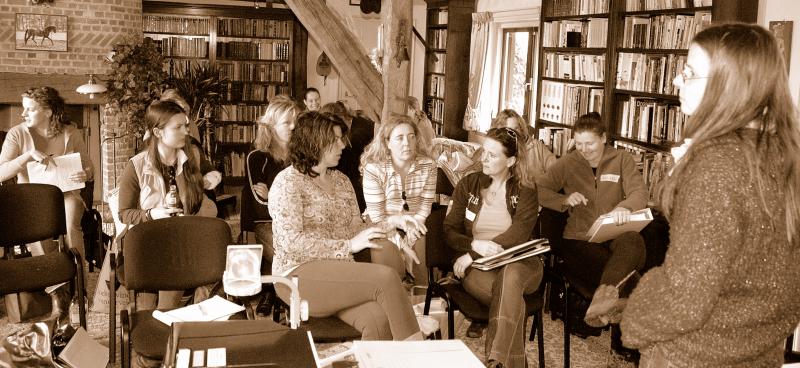
Course requirements

Selection: Applicants are selected during a 2-day introductory workshop and individual interview. Candidates register with SHP-E(NL) and must be accepted by the training commission.

The Foundation Course (1st Year): Consists of 9 two-day modules and an exam module spread over one year, supplemented by theory, practical exercises, self-awareness, and supervision. Requires an 85% attendance record and successful exam completion to advance.


Advanced Course with Specialisation (2nd Year): Consists of 9 modules and an exam module focusing on specialisation fields:

  • Remedial educational support
  • Psychosocial support
  • Developmental support
  • Rehabilitation and reintegration
  • Equine-facilitated psychotherapy

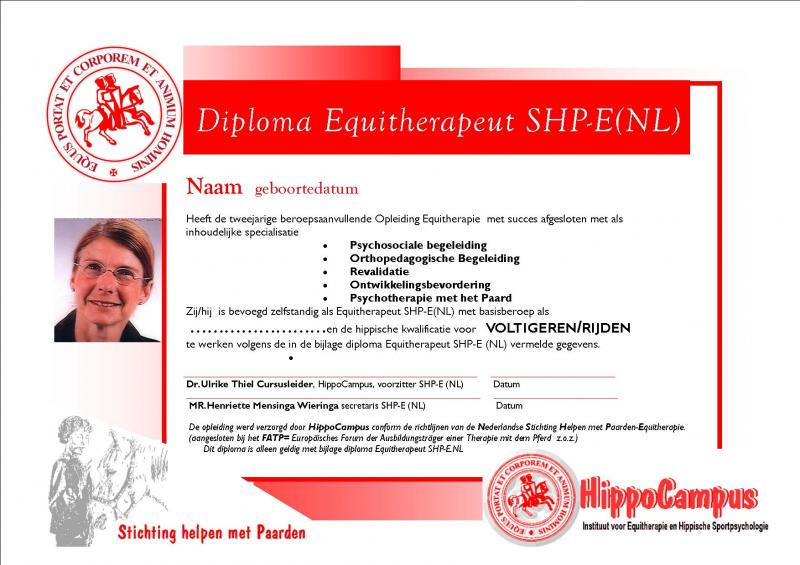
Diploma: Awarded upon successful completion of phases 1 and 2, supplementary modules, first aid certificate, riding qualification, and a police clearance certificate.

Curriculum & General Topics

The course structure is divided equally: 1/3 theory & literature study, 1/3 practical exercises & self-awareness, and 1/3 structuring, formulating & evaluating.
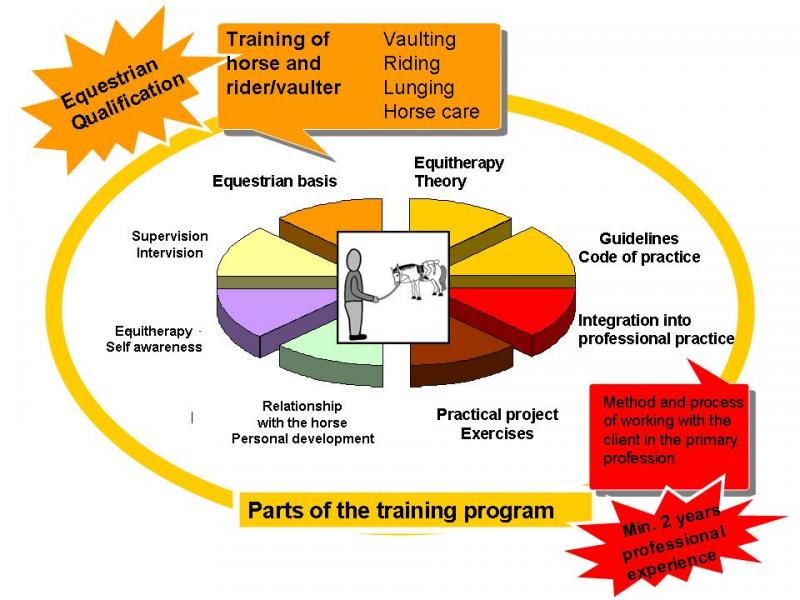
Training diagram

General Topics Covered:

  • Technique, therapeutic process, interventions, and process supervision (supervision, evaluation, and intervision)
  • Personal therapeutic process and integration of equitherapy into primary occupation
  • Assessment, evaluation methods, and reporting techniques
  • Basic educational and psychotherapeutic principles of SHP-E(NL)
  • Indications and contraindications, physical experience, and non-verbal communication
  • Therapeutic performance, safety aspects, and working with horses
  • Training the therapy horse, mental health, horsemanship, and riding techniques
  • Triangular relationship between therapist, client, and horse

Practical Project and Examinations
Practical project

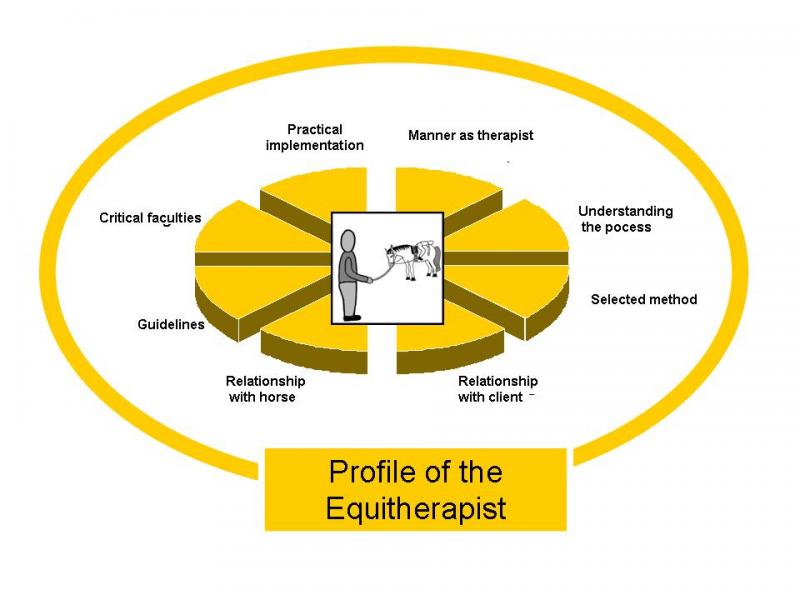
At the end of the first year, students must conduct a preliminary assessment, devise a treatment plan, and organize 10 equitherapy sessions with a client and therapy horse, supported by peer intervision. The practical project is assessed via an oral examination based on criteria scaled 1–10:

  • Process understanding and process supervision
  • Practical performance & chosen method
  • Client relationship & horse relationship
  • Professional manner, safety, and general standards
  • Critical attitude and analysis of own performance
 
Examination workflow diagram
Logo Copyright: No part of this publication may be reproduced or published without prior permission. Citation is allowed following scientific rules. Author: U. Thiel • www.equitherapie.org