Nederlandse Stichting Helpen met Paarden – Equitherapie
 

What is Equitherapy

CONCEPT • SHP-E(NL)

Equitherapy (SHP)

Helping with the help of the horse
Equitherapy SHP

Equus is the Latin word for horse. Therapy signifies "healing process” in the widest sense. Therapy is often associated with illness. In relation to psychotherapeutic, psychosocial, and pedagogic measures, this means there is often still a certain reluctance to "have therapy" or to "send one's child to have therapy," as this would be tantamount to admitting mental illness, bringing with it a certain stigmatization. For similar reasons, there is often hesitation in applying the term 'therapy' to equine-assisted measures that fall within these categories.

In the case of therapeutic riding (as advocated by SHP-E(NL)), we believe that we speak of equitherapy with good reason, as the activity in question is a targeted process tailored to the client's difficulties, which aims to reduce troubling conditions – and to thus systematically improve quality of life in the widest sense. To achieve this, an array of defined impact factors and a systematic process model are employed.

To further differentiate equitherapeutic processes, distinctions are made across fields:

  • Processes which promote and support early development (young children).
  • Processes which complement development in the pedagogic context (mainly children and adolescents, but also adults).
  • Processes which provide support in the psychosocial field (children, adolescents, adults).
  • Processes which intervene in earlier development deficits through retroactive healing or regressive experience (children, adolescents, adults).
 

„In contrast to the general positive effects of having contact with the horse or riding in the course of equine-assisted activities, equitherapy deals with the targeted promotion, development, support, and healing in the course of a systematic, defined process that is supervised by the therapist and supported by the horse. Thus one can speak of therapy in the proper sense.“

A Holistic Concept

A significant factor in equitherapy is the analogue physical communication that occurs while with and on the horse, which is expressed in the movement dialogue. By means of a dialogue with the horse, other group members, and the therapist, within the framework of a supportive relationship, the client's self-evaluation, self-image, and self-esteem can be advanced and personal development supported.

The component of analogue communication and the experience of being carried can provide a link to early experiences, or complement and repair these if necessary. The psychomotor, psychosensor, and psychosocial components lead to purposeful experiences and skill development.

The Function of the Horse
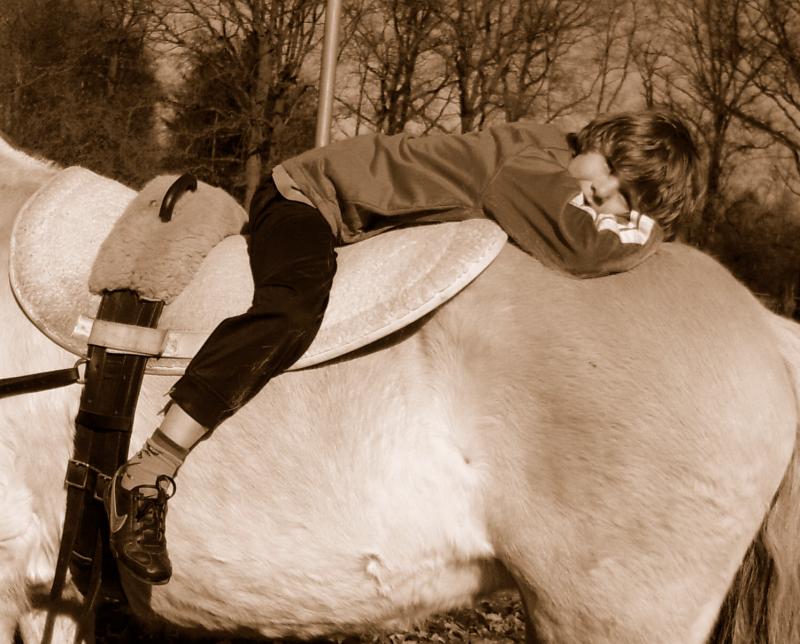
Therapy horse SHP

The therapy horse has a significant function in this process, enabling it to be more than just a movement stimulus, gymnastics apparatus, or cuddly toy. Based on the client's positive resources and set within a secure, well-structured triangular situation, the client makes purposeful new experiences gained through the relationship and movement dialogue with the horse.

These experiences occur at cognitive, sensory, emotional, motor, and social levels, opening up new opportunities for behavior and self-perception. The therapy concept of SHP-E(NL) represents a holistic, well-defined, and systematic process based on a triangular relationship between therapist, client, and horse.


Psychomotility & Sensorimotor Function
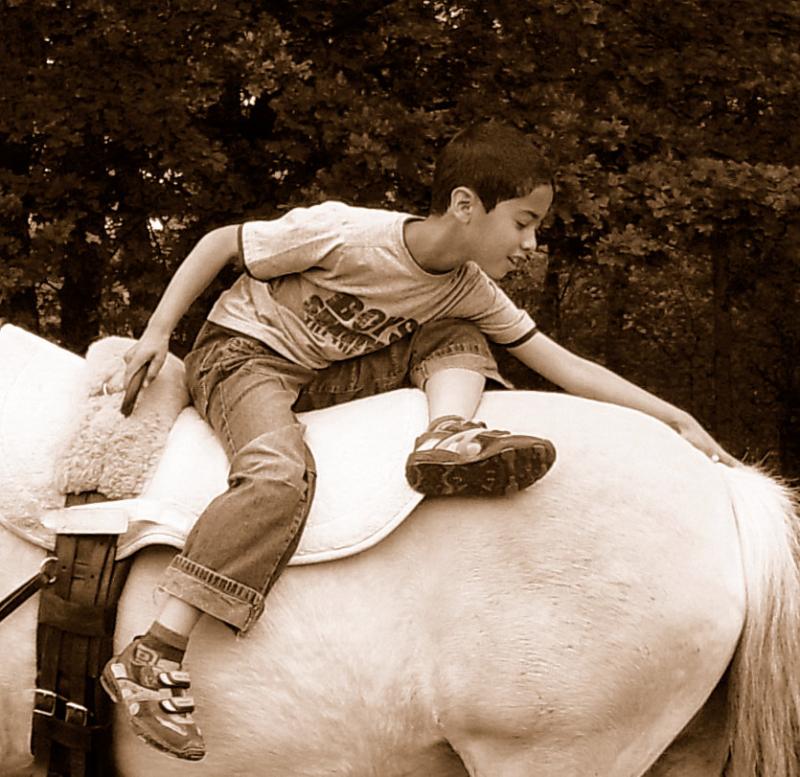
Body awareness

Development and improvement of body awareness: Body awareness encompasses conscious and unconscious dimensions of experiencing and processing body-related sensations, feelings, and perceptions. The body image is based on subjective perception and emotionally determined correlates.

Sensorimotor function: Describes the interaction of motor function and senses necessary for meaningful movement; the interplay of sensory and motor capacities, studying connections between brain/nerve activity and movement sequences.

 
Psychomotility

Psychomotility (Functional Unity): Describes the functional unity of psychological and motor processes—the close coupling of physical and mental feeling. Human movement is defined as the result of a relationship process and interplay of psychological, social, and somatic factors influencing personality predisposition.


The Cyclic Process Model and its Impact Factors
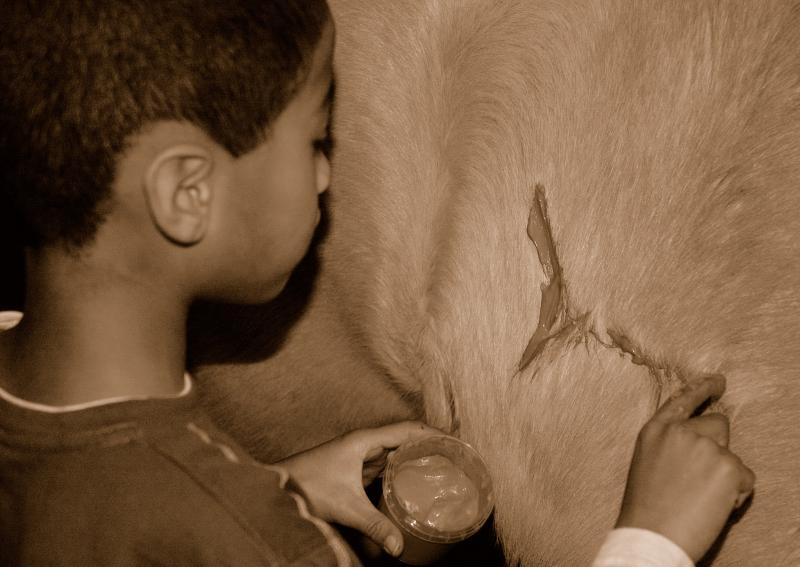
Process model

The starting point for all concepts is offering the client an opportunity to embark on a journey of discovery with horse and therapist in a new, unburdened setting. Together, therapist and client formulate objectives by bringing together specialized knowledge and the client's needs.

 
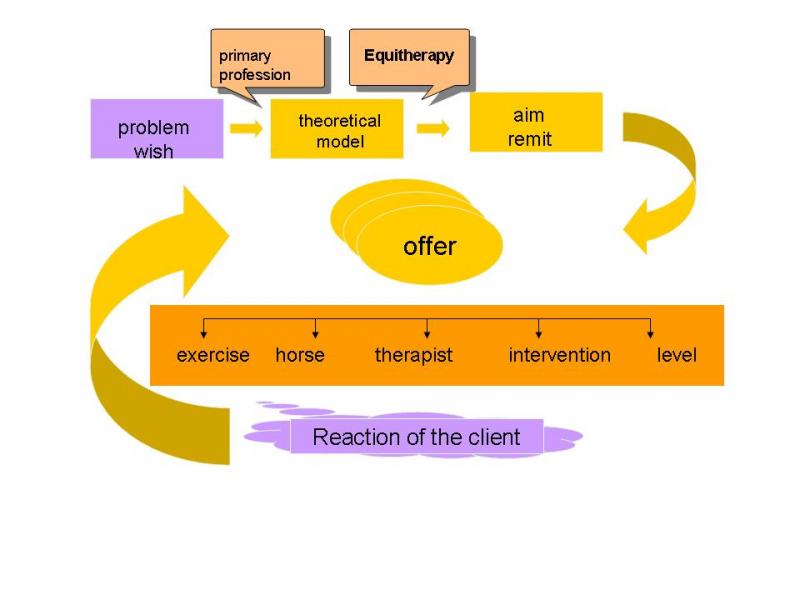
Cyclical process diagram

The impact factors in the cyclical process between therapy provision and reaction of the client.

The therapeutic process defines itself as a progressive, cyclical process building on interaction within a secure setting, individual difficulties, exercises, and interventions attuned to the therapy stage.
Logo Copyright: No part of this publication may be reproduced or published without prior permission. Citation is allowed following scientific rules.